

Book online for exams, cleanings & Invisalign consultations.
For all other appointments,
New patients: (770) 202-9668Existing patients: (770) 664-1244
A brighter smile can change how you feel and how others perceive you. At North Atlanta Aesthetic Dentistry in Alpharetta, we blend clinical expertise with conservative cosmetic judgment to help patients achieve whiter teeth safely and predictably. Whether you want a dramatic one-hour improvement or a gradual, convenient program you can use at home, our approach focuses on individualized results, oral health, and long-term maintenance rather than a one-size-fits-all solution.
Over-the-counter whitening products can provide modest improvement, but professional systems deliver stronger, longer-lasting outcomes because they are designed for controlled, supervised use. In our office we evaluate enamel health, gum condition, and the type of staining before recommending a whitening pathway. This pre-treatment assessment helps set realistic expectations and avoids treating teeth that would respond poorly or be made uncomfortable by aggressive whitening.
Professional whitening also allows for customization—concentration of bleaching agent, application technique, and the use of protective barriers are all adjusted to the individual patient. That tailored approach minimizes unwanted side effects like uneven shade changes or soft tissue irritation and increases the likelihood of achieving results that appear natural with your facial features and skin tone.
Finally, when whitening is managed by a dental team, restorative work—crowns, veneers, or composite fillings—can be coordinated so that color-matched restorations blend seamlessly with your newly brightened teeth. This planning avoids the mismatch that sometimes occurs when restorations are completed before whitening is finalized.

A single-visit whitening option is an excellent choice for patients who want swift, controlled improvement under professional supervision. We use Opalescence Pro by Ultradent, a clinically proven in-office system that can produce a noticeable change in about an hour. The procedure begins with a focused oral exam, shade assessment, and protection of gums and soft tissues so the whitening agent can be applied safely.
The in-office formula utilizes a higher concentration of hydrogen peroxide and is chemically activated, which reduces the need for auxiliary light sources that can cause heat-related sensitivity. Because the protocol is applied by a clinician, exposure times are carefully monitored and adjusted to balance whitening efficacy with comfort. Many patients appreciate the predictability of a single appointment paired with professional oversight.
During the visit we also discuss short-term aftercare—what to avoid immediately following treatment, how to manage mild sensitivity if it occurs, and when to consider touch-up options. For patients with deeper intrinsic discoloration or significant enamel wear, the clinical team will explain whether additional sessions or alternative cosmetic treatments would be more appropriate.

For patients who prefer to whiten on their own schedule, we offer a professionally supervised at-home program using Opalescence Home Advanced. This system delivers a moderate-strength hydrogen peroxide formula in prefilled trays engineered with UltraFit technology to provide an intimate, comfortable fit and consistent contact with tooth surfaces. Because the product is dispensed through the practice, we can ensure correct use and monitor progress.
At-home treatments are particularly useful for people who want gradual shade changes or need to maintain results after an in-office session. Typical protocols vary by patient—short daily wear periods or overnight wear—depending on sensitivity, desired pace of whitening, and lifestyle. We provide clear instructions and follow-up so you can achieve reliable improvement without guessing at time or dosage.
Another advantage of a professional at-home program is that it allows for intermittent “top-ups” to maintain brightness over time. Because trays are custom-fit and supplied through the practice, they tend to retain a better seal and deliver more even whitening than generic store-bought products.
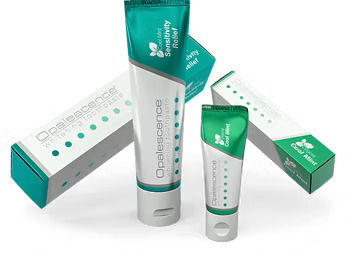
Maintaining a bright smile requires attention to routine oral hygiene and thoughtful choices about daily products. Opalescence Whitening Toothpaste is formulated for everyday use to remove surface stains and support overall enamel health; it comes in options such as Cool Mint for regular maintenance and Sensitivity Relief for patients who need a gentler formula. Using a toothpaste designed to complement professional whitening helps preserve shade without harsh abrasion.
Beyond toothpaste, simple lifestyle adjustments make a substantial difference: limiting dark beverages (coffee, tea, red wine), rinsing or brushing after stain-prone foods, and avoiding tobacco all reduce future discoloration. When stains recur, targeted touch-ups with your custom trays or a brief professional application can restore brightness without repeating an intensive course of treatment.
We will also review timing for whitening in relation to other dental care. For example, whitening is most predictable when performed after a cleaning and before any new restorative work, and patients with active decay or gum disease are stabilized prior to cosmetic procedures. This sequencing protects oral health while maximizing cosmetic benefit.
Comfort and safety are central to any whitening recommendation. Many professional formulations include desensitizing agents such as potassium nitrate and fluoride to minimize discomfort and help strengthen enamel. Our team evaluates sensitivity history, existing restorations, and enamel thickness to select a protocol that reduces risk and improves tolerance during treatment.
Not all discoloration responds equally to bleaching. Surface stains and yellowing typically improve predictably, while gray or blue-toned discoloration—sometimes caused by medications or prior trauma—can be more resistant. In those cases we discuss realistic outcomes and alternative cosmetic solutions if whitening alone is unlikely to meet your goals. The decision is always made with an emphasis on long-term oral health and appearance.
Ultimately, the best whitening plan is one that aligns with your schedule, sensitivity profile, and cosmetic objectives. During a consultation at our Alpharetta office we will walk through the options, explain how results are measured, and recommend a personalized course of care so you can proceed with confidence.
Ready to explore professional teeth whitening? North Atlanta Aesthetic Dentistry is available to answer questions and help you choose the option that fits your goals and comfort level. Contact us to learn more about our whitening programs and to schedule a consultation with our dental team.

Professional teeth whitening uses peroxide-based bleaching agents that penetrate enamel to break apart stain molecules and lighten tooth color. Hydrogen peroxide or carbamide peroxide releases oxygen that alters chromogens inside the tooth structure, producing a measurable change in shade. When applied correctly these agents remove both surface and some deeper stains while preserving the tooth’s natural structure.
Treatment is delivered under dental supervision so concentration, exposure time and protective measures are tailored to each patient. This controlled approach improves predictability compared with over-the-counter products and reduces the risk of uneven whitening or soft tissue irritation. A clinician also coordinates whitening with other dental care to ensure optimal timing and aesthetic outcomes.
In-office whitening is performed in a single visit using higher-concentration formulas such as Opalescence Pro and produces a noticeable change in about an hour. The clinician protects soft tissues, monitors exposure times and can adjust the protocol to balance results and comfort. Chemically activated formulations reduce reliance on lights and help minimize heat-related sensitivity.
At-home whitening offered by the dental team uses custom-fitted trays and professionally dispensed gels like Opalescence Home Advanced for gradual, controlled whitening. Patients follow a prescribed wear schedule—daily short wear periods or overnight options—guided by sensitivity and desired pace of results. Custom trays provide a better seal and more consistent contact than generic store-bought trays, improving safety and uniformity of whitening.
Before recommending whitening the team performs a focused exam to evaluate enamel integrity, gum health, existing restorations and any history of sensitivity. They identify whether discoloration is extrinsic, intrinsic or related to prior dental work, which influences treatment choice and prognosis. This assessment also ensures active decay or periodontal disease is stabilized before cosmetic procedures proceed.
Based on findings the clinician explains realistic expectations and outlines whether in-office treatment, a supervised at-home program or alternative cosmetic options are appropriate. Patients receive guidance on sequencing whitening with cleanings and restorative care so color matching is predictable. A personalized plan reduces the chance of disappointing results and protects long-term oral health.
Professional whitening is safe when provided under dental supervision and with appropriate protective barriers to shield gums and soft tissues. Many professional gels include desensitizing agents and fluoride to reduce transient discomfort and support enamel strength. Clinicians monitor exposure times and modify protocols for patients with thin enamel or a sensitivity history.
Temporary sensitivity and mild gum irritation are the most common side effects and typically resolve within days of completing treatment. Management strategies include shorter wear times, lower-concentration gels, use of desensitizing toothpaste and topical fluoride applications. If sensitivity persists the dental team evaluates for alternative approaches or additional protective measures.
Ideal preparation for whitening includes a professional cleaning to remove plaque and surface deposits so shade assessment is accurate. Patients should postpone whitening until active decay is treated and gum disease is stabilized to avoid discomfort and uneven results. The clinician records a baseline shade and photographs the teeth to measure changes and document outcomes.
After whitening patients are advised to avoid stain-prone foods and beverages—such as coffee, tea and red wine—for the first 48 to 72 hours to allow oxygenated enamel to rehydrate and stabilize. Using a sensitivity-formulated toothpaste and gentle oral hygiene reduces post-treatment discomfort while preserving shade. Periodic touch-ups with custom trays or brief professional maintenance appointments help sustain results over time.
Longevity of whitening varies by individual and depends on diet, oral hygiene, tobacco use and natural aging of the teeth. Many patients enjoy several months to a few years of improved shade before noticing gradual darkening from environmental factors. Teeth with intrinsic discoloration may show less durable changes and often require supplemental cosmetic care for long-term improvement.
Maintenance strategies include occasional at-home top-ups with custom trays, using whitening toothpaste designed to be gentle on enamel and scheduling professional rechecks as recommended. Avoiding or reducing intake of staining substances and rinsing after consuming pigmented foods can substantially extend the interval between touch-ups. Your dental team will recommend a maintenance schedule that aligns with your lifestyle and cosmetic goals.
Bleaching agents lighten natural tooth structure but do not change the color of dental ceramics, composites or existing restorations. If restorations are present, whitening is planned so new or replacement restorations can be color-matched to the post-whitening shade. Treating teeth before completing restorative treatment avoids mismatched crowns, veneers or fillings after whitening.
In some cases restorations may require replacement or adjustment following whitening to achieve seamless esthetics, and the dental team discusses these options during treatment planning. Coordinating whitening with restorative timelines ensures the final result looks natural and balanced with surrounding teeth. This collaborative approach helps avoid surprises and preserves the integrity of existing dental work.
Surface stains from foods, beverages and smoking generally respond well to peroxide-based whitening and often show predictable improvement. Intrinsic discoloration—such as gray or blue tones caused by certain medications or prior trauma—can be more resistant and may not reach the same level of lightening. Identifying the stain type during evaluation helps set realistic expectations for achievable results.
When whitening alone is unlikely to meet cosmetic goals, the clinician discusses alternative solutions such as porcelain veneers, composite bonding or internal bleaching of endodontically treated teeth. These options target color that bleaching cannot correct and can be combined with whitening for comprehensive smile improvement. Decisions prioritize long-term oral health as well as appearance to ensure sustainable outcomes.
To manage sensitivity clinicians select products with built-in desensitizing agents and tailor wear times or concentrations to patient tolerance. Desensitizing toothpaste containing potassium nitrate and fluoride can be used before, during and after whitening to reduce nerve response. Topical fluoride varnishes or gels applied in the office strengthen enamel and further alleviate discomfort when appropriate.
If sensitivity occurs patients are advised to shorten application time, switch to a lower-strength protocol or take brief breaks between cycles while continuing maintenance care. Over-the-counter pain relievers may help for short-term discomfort, but persistent or worsening sensitivity should be evaluated by the dental team. Open communication with the clinician allows rapid protocol adjustments to maintain comfort without sacrificing esthetic goals.
To get started patients schedule a consultation at our Alpharetta office where the team performs an exam, discusses staining history and measures baseline shade. During the visit the clinician explains the differences between in-office and supervised at-home options and recommends the protocol that best fits your schedule and sensitivity profile. You will also receive instructions on pre-treatment preparation and expected aftercare so you know how to protect your newly brightened smile.
North Atlanta Aesthetic Dentistry can answer specific questions about Opalescence Pro and Opalescence Home Advanced and will create a personalized plan that coordinates whitening with any necessary restorative care. Our team emphasizes safety, predictable results and long-term maintenance when recommending a whitening pathway. Contact the practice to arrange a consultation and learn which option is likely to deliver the outcome you want.
Take the first step toward the confident, beautiful smile you deserve.

Aesthetic, restorative and general dentistry for the whole family in Alpharetta, Georgia.