

Book online for exams, cleanings & Invisalign consultations.
For all other appointments,
New patients: (770) 202-9668Existing patients: (770) 664-1244
At the office of North Atlanta Aesthetic Dentistry, we take a practical, prevention-first approach to oral care. Routine oral exams are more than a cursory glance; they are a chance to build a clear picture of your current dental health and to spot early changes that can be addressed before they become more complex. During each visit, our team combines careful visual inspection, targeted diagnostic imaging, and patient-centered conversation to create a plan that fits your needs and lifestyle.
Regular exams help protect not only your teeth but the comfort and function of your entire mouth. Over time, small problems—like a developing cavity, an inflamed gum pocket, or subtle bite changes—can grow into issues that affect chewing, speech, or confidence. By identifying those changes early, we can recommend simple, evidence-based interventions that preserve oral structures and support long-term wellness.
Your first comprehensive appointment sets the foundation for personalized care. We begin by reviewing your medical and dental histories and asking about any symptoms, medications, or habits that could influence oral health. This conversation ensures we consider the whole person when assessing risks and planning any necessary follow-up.
The clinical portion of the exam includes a systematic evaluation of your teeth, gums, and soft tissues. We assess each tooth for signs of decay, fractures, or restoration problems and examine the gums for pockets, bleeding, and recession. As part of a thorough evaluation, we screen for oral cancer and evaluate the temporomandibular joint (TMJ) for signs of strain, clicking, or limited movement.
When indicated, diagnostic images are taken to reveal what cannot be seen with the naked eye. Digital radiographs and other imaging tools allow us to evaluate bone levels, check for hidden decay between teeth, and view root structures. Based on findings from the exam and images, we discuss next steps and prioritize treatments with an emphasis on conservative, long-term solutions.

During an oral exam, we watch for a set of clinical signals that often indicate broader concerns. Persistent bleeding or swelling of the gums can point to periodontal disease, while new sensitivity or dark spots may signal early decay. Ulcers, patches of abnormal tissue, or persistent numbness are taken seriously as potential indicators of systemic conditions or oral cancer and prompt further investigation.
We also evaluate functional patterns that influence dental health over time. Evidence of clenching or grinding (bruxism) can show up as flattened tooth surfaces or muscle tenderness. Bite discrepancies can cause uneven wear and contribute to jaw pain. By identifying these patterns early, we can suggest protective measures—such as night guards or occlusal adjustments—to prevent progressive damage.
For children and adolescents, an exam includes growth and development checks to determine if orthodontic guidance will be helpful. Monitoring tooth eruption, jaw alignment, and spacing at regular intervals allows us to recommend timely interventions that can simplify treatment later and support healthy dental development.

Modern research increasingly shows that the mouth is a window to the rest of the body. Chronic gum inflammation, infections, and other oral conditions have been associated with a range of systemic concerns, including cardiovascular disease, diabetes management challenges, and respiratory problems. Detecting and managing oral inflammation is therefore an important component of supporting whole-body health.
The relationship works in both directions: medical conditions and medications can produce oral signs such as dry mouth, ulcerations, or altered taste. During an exam, we take time to understand your overall health background so that oral symptoms can be interpreted in context, and where appropriate, we coordinate care or recommend medical follow-up.
Screening for oral cancer is an essential part of every comprehensive exam. Early detection dramatically increases treatment options and improves outcomes. We perform a careful inspection of the lips, tongue, floor of the mouth, and surrounding tissues for any unusual lumps, discolorations, or persistent sores that warrant further testing.
Home care is the foundation of a healthy mouth, but professional cleanings remove hardened deposits that brushing and flossing alone cannot eliminate. Plaque that mineralizes into tartar provides a haven for bacteria that can lead to cavities and periodontal disease. Our hygienists use instruments and polishing techniques to clear these deposits and reduce inflammation in the gums.
Routine visits are also opportunities for education and maintenance. We review your brushing and flossing technique, recommend adjunctive aids when appropriate, and create a realistic schedule for recall visits based on your individual risk factors. For many people, biannual checkups provide the ideal balance between prevention and early intervention.
When early disease or risk factors are identified, prompt, conservative measures often prevent progression and preserve more of your natural tooth structure. In short, regular exams and cleanings are an investment in long-term oral function and comfort, reducing the likelihood of more invasive care down the road.
Digital radiography is a cornerstone of modern diagnosis. These x-rays reveal decay between teeth, the health of tooth roots, and bone structure with minimal exposure to radiation. Immediate image availability allows us to explain findings during your visit so you leave with a clear understanding of what we see and why it matters.
Different types of images serve different purposes. Bitewing radiographs highlight the crowns of molars for decay detection, periapical images focus on individual roots and surrounding bone, and panoramic films give a broad overview of jaw structure, tooth development, and impacted teeth. For complex cases or surgical planning, three-dimensional cone-beam computed tomography (CBCT) provides highly detailed views that guide precise treatment decisions, such as implant placement.
We recommend imaging selectively and in line with current guidelines, tailoring the approach to your history and presenting concerns. The goal is to obtain the information needed to diagnose accurately and to plan care safely and effectively—no more, no less.
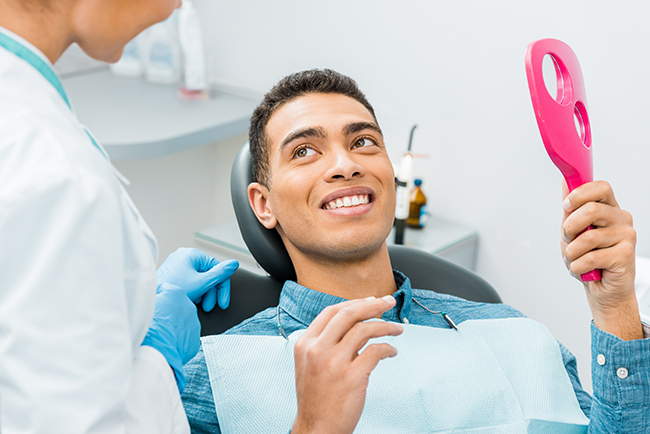
Regular oral exams are a central part of preserving a healthy, functional smile. By combining careful clinical assessment, targeted imaging, and clear communication, our goal is to help you avoid preventable problems and to manage those that do arise with thoughtful, minimally invasive care. If you have questions about what an exam involves or would like to learn how we can support your oral health, please contact us for more information.

A routine oral exam begins with a review of your medical and dental history and a conversation about any symptoms, medications, or habits that could affect oral health. The clinical exam involves a systematic visual inspection of teeth, gums, tongue, cheeks, and other soft tissues to identify decay, worn restorations, pockets of gum inflammation, or unusual lesions. The clinician also evaluates bite function and the temporomandibular joint for signs of strain, clicking, or limited movement.
When indicated, diagnostic imaging such as digital radiographs is used to reveal issues that cannot be seen with the naked eye, including hidden decay between teeth and the condition of tooth roots and bone. The exam typically includes an oral cancer screening that checks the lips, tongue, floor of mouth, and surrounding tissues for any suspicious changes. Based on findings, the team discusses prioritized, conservative next steps and any preventive measures that may reduce future risk.
Your initial comprehensive exam establishes a baseline for personalized care and starts with a detailed medical and dental history to identify health factors that influence treatment planning. The clinician performs a full-mouth assessment, checking each tooth for decay, fractures, and restoration integrity while evaluating gum health for pockets, bleeding, or recession. A thorough soft-tissue evaluation and oral cancer screening are performed to identify any abnormal areas that warrant further investigation.
Diagnostic images are taken selectively to provide complementary information about bone levels, root structures, and interproximal decay that may not be visible clinically. The provider explains findings clearly and outlines recommended next steps, emphasizing conservative, evidence-based interventions when possible. The initial visit also sets expectations for recall frequency, preventive care, and any follow-up appointments needed to address identified concerns.
Recall frequency is individualized based on risk factors such as history of decay, periodontal status, systemic health conditions, tobacco use, and oral hygiene practices. For many patients, a six-month interval for an exam and professional cleaning provides an effective balance between prevention and early detection, but some individuals benefit from more frequent visits if risk is elevated. The hygienist and dentist work together to recommend a recall schedule tailored to your needs and to monitor changes over time.
Regular visits allow the team to remove hardened deposits that home care cannot eliminate, reduce gum inflammation, and catch small problems before they become more complex. Ongoing recall visits are also opportunities for education about brushing, flossing, and adjunctive aids that support long-term oral health. Adjustments to the schedule are made when new information or changes in health status indicate a different approach.
Certain symptoms warrant prompt evaluation outside of routine recall, including persistent gum bleeding, swelling, new or worsening tooth sensitivity, unexplained tooth pain, and sores or lumps that do not heal within two weeks. Changes in bite, difficulty chewing, jaw pain, or new numbness in lip or tongue areas also deserve timely attention because they can indicate progressive problems that benefit from early intervention. Any sudden changes in oral comfort or function should be reported so they can be assessed without delay.
Early evaluation allows for less invasive and more predictable treatment when problems are identified promptly. The clinical team uses targeted diagnostics to determine cause and to prioritize conservative treatment options where appropriate. If an urgent condition is suspected, the practice will recommend an appropriate timeline for care and any interim measures to protect oral health.
The mouth often reflects broader health conditions, and findings during an oral exam can provide important clues about systemic disease. Chronic gum inflammation has been associated with conditions such as diabetes and cardiovascular disease, while dry mouth, oral ulcers, or unusual tissue changes can be related to medication effects or autoimmune disorders. Identifying these oral manifestations enables the dental team to recommend appropriate medical follow-up or adjustments to oral care that account for the patient’s overall health.
During the exam, clinicians place oral signs into the context of the patient’s medical history and current medications to interpret findings accurately. When a potential systemic link is suspected, the office coordinates with medical providers or advises patients to seek medical evaluation, helping ensure comprehensive care. This collaborative approach supports both oral and whole-body health by facilitating timely diagnosis and management of underlying conditions.
Diagnostic imaging is selected based on clinical need and follows contemporary guidelines to minimize exposure while maximizing diagnostic value. Bitewing radiographs are commonly used to detect decay between posterior teeth, periapical images focus on the roots and surrounding bone of specific teeth, and panoramic films provide an overview of jaw structure, tooth development, and impacted teeth. For complex cases or surgical planning, three-dimensional cone-beam computed tomography (CBCT) offers detailed views that aid precise decision-making.
Digital radiography provides images with minimal radiation and immediate availability so findings can be reviewed with the patient during the visit. The clinician explains why a particular image is recommended and how it will influence the diagnosis or treatment plan. Imaging is used judiciously to obtain the information needed for safe, effective care—no more, no less.
Exams for children and adolescents focus on growth and development in addition to the routine assessment of teeth and gums. Clinicians monitor tooth eruption patterns, spacing, and jaw development to identify early orthodontic concerns that may benefit from timely intervention. Preventive measures such as fluoride guidance, sealants, and habit counseling (for thumb-sucking or prolonged pacifier use) are emphasized to reduce decay risk and support healthy dental development.
Pediatric exams also include age-appropriate education for caregivers about home care, diet, and injury prevention, and scheduling is tailored to developmental needs and risk factors. When early signs of malocclusion or space problems are found, the team discusses monitoring strategies and possible referrals for orthodontic evaluation to simplify future treatment. The overall goal is to preserve natural tooth structure and promote a stable, functional bite as the child grows.
Oral cancer screening is an essential part of every comprehensive exam and involves a careful visual and tactile inspection of the lips, tongue, floor of the mouth, cheeks, and oropharyngeal tissues. Clinicians look for persistent sores, discolorations, lumps, or patches of abnormal tissue and assess any areas that appear unusual or fail to resolve over time. Palpation of the neck and intraoral tissues helps detect enlarged lymph nodes or firm masses that may require further evaluation.
If a suspicious area is identified, the provider documents its size and appearance, recommends appropriate follow-up such as repeat observation, adjunctive testing, or referral to a specialist, and explains the rationale to the patient. Early detection significantly improves treatment options and outcomes, so timely assessment and communication are priorities during the exam. Patients are encouraged to report any persistent oral changes between visits for prompt evaluation.
Preparing for an exam is straightforward: bring a list of current medications, any recent medical updates, and questions or concerns you want addressed during the visit. Arrive with a record of prior dental work if available, and be ready to discuss symptoms such as sensitivity, pain, or changes in chewing or speech. Good preparation helps the clinician interpret findings in the context of your overall health and ensures the visit is efficient and focused on your priorities.
Avoid eating a strong-flavored meal immediately before the visit if you expect a soft-tissue evaluation, and follow any specific instructions provided by the office prior to imaging or specialized procedures. If you have dental anxiety, let the team know so they can discuss comfort options and explain the steps of the exam to put you at ease. Clear communication before and during the visit supports a productive assessment and a tailored plan of care.
Findings from the exam and any diagnostic images are synthesized into a prioritized plan that emphasizes conservative, evidence-based treatments and preventive strategies. The clinician discusses risks, explains recommended steps, and outlines how each intervention preserves function and minimizes future problems, allowing patients to make informed decisions about their care. When multiple concerns are present, the team sequences treatment so that urgent issues are addressed first and long-term maintenance is incorporated into the plan.
In the office of North Atlanta Aesthetic Dentistry, the approach centers on clear communication and shared decision-making so that recommended care aligns with a patient’s goals and lifestyle. The practice coordinates follow-up appointments, preventive care, and any necessary referrals, and provides guidance on home care and adjunctive therapies such as occlusal guards or topical agents. Ongoing recall visits are used to monitor outcomes and adjust the plan as needed to support lasting oral health.
Take the first step toward the confident, beautiful smile you deserve.

Aesthetic, restorative and general dentistry for the whole family in Alpharetta, Georgia.