

Book online for exams, cleanings & Invisalign consultations.
For all other appointments,
New patients: (770) 202-9668Existing patients: (770) 664-1244
Clear aligner therapy has transformed how many people approach orthodontic change — it offers a discreet, clinically proven path to improved alignment without the visual and practical compromises of traditional brackets and wires. This page explains how Invisalign® works, what to expect during treatment, and how clinicians apply modern digital tools and clinical judgment to guide successful outcomes. If you’re considering straightening your teeth, the information below will help you decide whether clear aligners are a suitable, evidence-based option for your goals.
Invisalign® for Teens
Invisalign® for Brides
Invisalign® for Travelers
Before & After Photos
Invisalign® Videos
FAQs
Invisalign® vs Braces
Invisalign® vs Direct-To-Consumer Aligners
Is Invisalign® Right For Me?
Invisalign® Costs
Invisalign® uses a series of custom-molded, transparent trays made from a specialized polymer that applies targeted forces to teeth. Each aligner in the sequence is slightly different, and when worn in the prescribed order, the aligners produce small, controlled tooth movements that accumulate into the intended correction. Because changes are incremental and planned in advance, clinicians can predict and manage many types of tooth movement with precision.
Digital planning plays a central role: clinicians begin with a detailed 3-D scan or impression of your mouth, which is then used to design a step-by-step treatment plan. This plan maps the path each tooth will take and determines where attachments or auxiliaries may be needed to achieve specific movements. The result is a coordinated workflow between the dental team and the aligner manufacturer to translate clinical goals into a sequence of aligners.
One of the practical strengths of clear aligners is their removability. Patients can take them out for short periods — for eating or oral hygiene — which simplifies brushing and flossing compared with fixed appliances. This flexibility supports better oral health during treatment, provided patients follow wear-time recommendations and maintain consistent hygiene.

An initial visit combines clinical examination with digital records to clarify your objectives and determine whether clear aligners are a good fit. Your dentist will outline the diagnostic steps and explain the decision-making process in straightforward terms.

Using a precise digital scan, the treatment team creates a tailored plan that sequences tooth movements. This blueprint helps patients visualize expected progress and understand key milestones before aligners are produced.
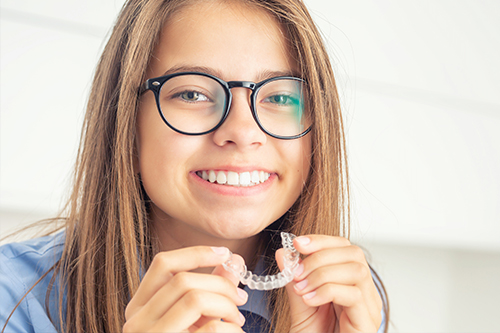
Each aligner is fabricated to fit the contours of your teeth and deliver controlled forces. The design process emphasizes comfort while preserving the clinical objectives mapped out in the digital plan.

From the first set of aligners through refinements, clinical follow-up ensures that tooth movement tracks with the plan. Regular check-ins give your clinician the opportunity to confirm progress and make adjustments as needed.
After a clinical exam and diagnostic imaging, the treatment planning phase is where the clinician converts your goals into a practical strategy. Modern workflows rely on software to simulate tooth movement across all stages of care; this simulation — often reviewed and adjusted by the treating dentist — becomes the master plan for the aligner series. The plan anticipates where attachments, interproximal reduction, or auxiliary elastics might be necessary to accomplish specific movements.
During planning, your provider will discuss realistic expectations, potential limitations, and measures that support success. Not every case is suited for clear aligners alone; complex skeletal or orthodontic issues may require combined approaches. The clinician’s role is to evaluate oral health, prior dental work, and bite relationships, and then recommend a path that balances efficiency, esthetics, and long-term stability.
Clear aligners are effective for a broad range of alignment concerns, including crowding, spacing, mild to moderate bite irregularities, and certain rotations. Many adults and teens prefer aligners for their discreet appearance and the freedom to remove them for meals and cleaning. However, suitability depends on the specific nature and severity of the problem, as well as the patient’s commitment to wearing the aligners as directed.
Pre-existing dental conditions must be addressed before starting orthodontic movement. Good periodontal health, stable restorations, and controlled tooth decay are prerequisites for predictable outcomes. Your dentist will confirm that the supporting structures are healthy and advise on any preparatory work — such as treating gum disease or replacing compromised restorations — so that aligner therapy proceeds safely.
For complex movements or skeletal discrepancies, aligners may be used in combination with other appliances or as part of a multidisciplinary plan. An individualized assessment identifies which cases are ideal for aligners alone, which benefit from adjunctive measures, and when referral to an orthodontic specialist is appropriate to achieve the best long-term result.
This patient wanted a brighter, more even smile. Rather than using restorations to disguise the misalignment, we moved the teeth into their correct position with Invisalign, then refined the result with the most conservative veneer preparation possible. Sequencing the treatment this way preserved healthy enamel that a veneer-only approach would have removed.

We began with Invisalign to create the ideal foundation for his smile. By correcting the alignment of his teeth first, we were able to plan a result that would feel balanced, natural, and beautifully tailored to his features.

With treatment complete, his teeth were in their ideal position, creating the perfect groundwork for cosmetic refinement. Proper alignment improved the smile on its own, and it allowed us to take a far more conservative approach to the next step.

With his teeth ideally aligned, we placed veneers on his upper six teeth using minimal enamel reduction. That preserved his natural tooth structure while achieving a seamless, timeless finish.
Successful outcomes depend largely on consistent wear. Most clinicians recommend daily wear for the majority of waking hours — removing aligners briefly for meals, drinks other than water, and oral hygiene. Because aligners are removable, patients generally find it easier to maintain normal eating habits and to keep teeth clean throughout treatment, reducing some risks associated with fixed appliances.
Comfort expectations are reasonable: new aligners typically cause mild pressure or soreness for a day or two as teeth adjust. Over-the-counter pain relievers and a soft diet during those early days can ease transition. Speech may alter slightly at first, but most people adapt quickly. Proper insertion and removal technique also reduces stress on the aligners and minimizes soft-tissue irritation.
Cleaning aligners is straightforward — rinsing after removal, gentle brushing with a soft toothbrush, and periodic soaking with a recommended cleaning solution keep trays clear and hygienic. Keep lost or damaged aligners policy in mind: contact your provider promptly if something happens to a tray so the clinical team can advise whether to move forward with the next tray or replace the missing one.
While the aligner material and manufacturing process are important, the clinician’s expertise shapes the final outcome. Experienced providers use diagnostic tools, digital scans, and an understanding of dental biomechanics to design a treatment sequence that manages tooth movement predictably. Clinical judgment is essential when planning attachment placement, staging movements, and evaluating when refinements are necessary.
Advances in 3-D imaging and software enable more nuanced plans, but these tools work best in the hands of a clinician who understands how movements interact and how patient-specific factors influence progress. Regular monitoring appointments allow adjustments if the teeth are not tracking as planned, ensuring the treatment remains on course and delivering the best possible functional and aesthetic result.
Ultimately, aligner therapy is a collaboration: the manufacturing system provides the appliance, but the clinician guides the strategy, monitors progress, and makes refinements. That partnership is what turns technology into a reliable pathway for meaningful and lasting improvement.
Browse these videos to learn more about the process and what patients commonly experience during aligner therapy.
*Invisalign® is a registered trademark of Align Technology, Inc.
At North Atlanta Aesthetic Dentistry, our approach is to pair proven aligner technology with careful clinical oversight so patients receive treatment that is safe, predictable, and tailored to their needs. If you have questions about whether clear aligners are right for you or would like to discuss the next steps, please contact us for more information and to arrange a consultation.
Take the first step toward the confident, beautiful smile you deserve.

Aesthetic, restorative and general dentistry for the whole family in Alpharetta, Georgia.