

Book online for exams, cleanings & Invisalign consultations.
For all other appointments,
New patients: (770) 202-9668Existing patients: (770) 664-1244
Dental implants can provide an exceptionally stable foundation for replacing missing teeth, but the implant itself is only one part of the finished result. The restoration attached to that implant is what ultimately recreates the appearance, function, and feel of a natural tooth. At North Atlanta Aesthetic Dentistry, we focus on this restorative side of implant dentistry, designing implant crowns, bridges, and other restorations to help patients eat, speak, and smile comfortably again.
Our office does not surgically place dental implants. Instead, we work closely with one of the area's leading oral surgery practices, coordinating your care from the restorative planning stage through surgical placement and completion of your final restoration. This team-based approach allows each phase of treatment to be handled by clinicians focused on their respective areas of care while keeping your overall treatment plan connected and consistent.
Because communication between the restorative and surgical teams begins early, important details such as implant position, the planned restoration, aesthetics, and function can all be considered together. Our goal is not simply to replace a missing tooth, but to create a finished restoration that fits naturally into your smile and supports comfortable, dependable function.

A dental implant is a small biocompatible post that is surgically positioned in the jaw to replace the supporting function of a natural tooth root. Once the implant has been placed and is ready to support a restoration, an abutment connects it to the visible replacement tooth or teeth. Depending on your needs, that restoration may be an individual crown, an implant-supported bridge, or a larger prosthesis designed to replace multiple missing teeth.
While the oral surgeon handles the surgical placement of the implant, our team plans and provides the restorative portion of treatment. Careful coordination between the two offices helps ensure that implant placement supports the intended final result. The position and angle of an implant can influence the appearance, bite, and function of the finished restoration, which is why collaboration is an important part of the process.
Once the appropriate stage of healing has been reached, we create your final restoration with close attention to shape, shade, bite, and surrounding teeth. The goal is a strong, natural-looking result that feels like it belongs in your smile rather than simply filling an empty space.
For one missing tooth, an individual implant crown can provide a highly natural-looking replacement without requiring neighboring healthy teeth to support a traditional bridge. Once the implant has been surgically placed and is ready for restoration, we design the crown to complement the surrounding teeth in size, shape, color, and proportion.
When multiple adjacent teeth are missing, implants can support a fixed bridge that replaces several teeth at once. Rather than relying on natural teeth at either end of the space, the restoration is supported by strategically positioned implants. Our team works with the oral surgeon during planning and then designs the final bridge for a comfortable bite, appropriate contours, and a natural appearance.
Implants can also provide the foundation for full-arch restorations when most or all of the teeth in an upper or lower arch need to be replaced. These cases require particularly close collaboration between the restorative dentist, oral surgeon, and dental laboratory so that implant positioning, bite relationships, appearance, and the final prosthesis are planned as parts of the same treatment.
For patients who prefer or require a removable option, implants can be used to improve the stability and retention of an overdenture. Precision attachments allow the restoration to connect securely to the implants while remaining removable for daily cleaning. We can help determine the restorative design that best balances stability, function, maintenance, and your individual treatment goals.

Successful implant treatment begins with a clear picture of what the finished smile should look and function like. When implant treatment is recommended, our office coordinates closely with the oral surgery practice responsible for surgical placement. Rather than treating surgery and restoration as unrelated steps, the two offices communicate throughout the process so that the implant is placed with the planned restoration in mind.
This collaborative approach also makes the experience easier for patients. Our team remains involved in the restorative plan while the oral surgeon provides the surgical expertise needed for implant placement. Information can be shared between the offices as treatment progresses, helping each team understand where you are in the process and what comes next.
In appropriate cases, our in-house dental lab can create temporary restorations in advance for same-day delivery at the oral surgeon's office. This coordination can allow a patient to receive a provisional tooth or restoration at the time of implant placement rather than navigating the surgical and restorative phases independently.
Not every implant can or should be restored immediately, so same-day temporary restorations depend on the individual treatment plan and the stability of the newly placed implants. When this approach is appropriate, however, close communication between our office, our lab, and the oral surgery team helps make the process as seamless as possible.
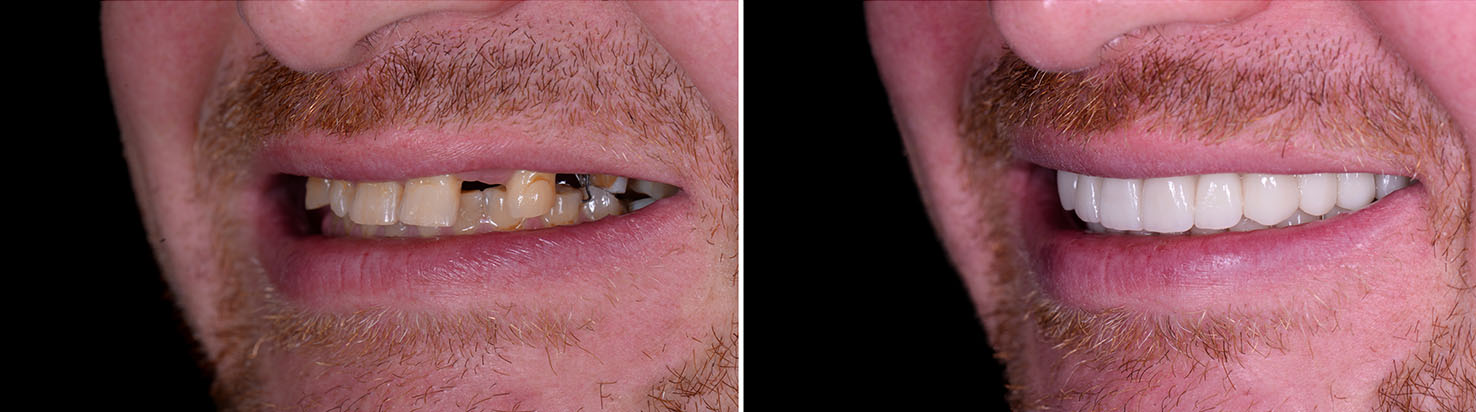
After the implant has healed sufficiently and the oral surgeon confirms that it is ready to be restored, attention turns to the final prosthesis. Our team evaluates the implant site, surrounding teeth, gum contours, and bite so the restoration can be designed for both appearance and function. Depending on the case, digital scans or other records may be used to capture the details needed to create the final restoration.
When the restoration is ready, we carefully evaluate its fit, contacts, bite, and appearance before completing treatment. Small details matter: a properly designed implant restoration should feel comfortable when you chew, be cleansable at home, and blend naturally with the teeth around it.
Implant restorations are designed for long-term use, but they still require routine professional and at-home care. Although the restoration itself cannot develop a cavity, plaque and inflammation can affect the gum and bone surrounding an implant. Daily brushing, appropriate cleaning around the restoration, and regular dental visits all help protect the tissues that support it.
Routine examinations also give us an opportunity to evaluate the restoration for wear, monitor your bite, and check the health of the implant and surrounding tissues. If you have a bridge, overdenture, or full-arch restoration, we can provide guidance on the specific cleaning techniques and maintenance that will help protect your investment.
Implant dentistry is most successful when the surgical and restorative phases work toward the same goal. At North Atlanta Aesthetic Dentistry, we provide the restorative expertise needed to turn a surgically placed implant into a functional, natural-looking tooth replacement while coordinating closely with a trusted local oral surgery team for implant placement.
From planning your restoration and coordinating with the surgeon to creating temporary teeth when appropriate and completing your final restoration, our office remains an active part of your care. This collaborative process allows us to focus on the details of your finished smile while your oral surgeon focuses on creating a strong surgical foundation.
If you are considering an implant or already have an implant that needs to be restored, contact North Atlanta Aesthetic Dentistry to schedule a consultation. We can evaluate your restorative needs, explain how the process works, and coordinate the next steps with the oral surgery team when surgical placement is needed.

Implant restorations are the visible prosthetic teeth—crowns, bridges, or dentures—that attach to a dental implant and recreate the appearance and function of natural teeth. The implant itself is a biocompatible post placed in the jaw to replace a tooth root, while the restoration is the finished tooth replacement that you see and use when eating and speaking. Together they restore chewing function and aesthetics, but each serves a distinct role in the overall treatment.
The restoration is designed to match the shape, color, and bite of surrounding teeth so it blends naturally with your smile. Materials and design vary depending on location in the mouth, patient needs, and long-term goals, and careful planning helps ensure the restoration is both functional and maintainable. Properly matched restorations also make routine cleaning and examination straightforward for long-term success.
Once an implant has been placed and allowed to integrate with the jawbone, an abutment is attached to connect the implant to the final restoration. The restorative process typically begins with impressions or digital scans to capture the exact contours of the implant site, adjacent teeth, and bite relationships. These records guide the fabrication of a crown, bridge, or overdenture that will be shaped and shaded to match the rest of your smile.
During restorative appointments, the team evaluates fit, occlusion, and aesthetics to ensure the prosthesis functions comfortably and is easy to clean. Adjustments may be made to contacts and bite before the restoration is finalized so chewing feels natural and forces are distributed appropriately. The goal is a stable, well-fitting restoration that integrates with your oral health plan.
Surgical placement of implants is typically performed by an oral surgeon or a periodontist who specializes in implant surgery, while the restorative dentist designs and places the final prosthesis. North Atlanta Aesthetic Dentistry focuses on the restorative phase, coordinating treatment plans with trusted local surgical partners to ensure implant position supports the intended restoration. This team-based approach leverages surgical expertise for implant placement and restorative expertise for the finished tooth replacement.
Coordination begins during planning so implant angulation, depth, and spacing accommodate the final crown or bridge. Regular communication and shared records between the surgeon and restorative dentist reduce surprises and make the transition from surgery to restoration smoother for patients. When indicated, temporary restorations can be delivered in concert with surgical teams to address immediate aesthetic needs.
For a single missing tooth, an individual implant crown replaces the tooth without altering adjacent healthy teeth, offering a conservative and natural-looking solution. When several adjacent teeth are missing, implant-supported bridges can span the space using implants for support rather than relying on natural teeth at either end. For patients missing most or all teeth in an arch, full-arch implant-supported prostheses or overdentures provide stable, long-term function and improved retention compared with conventional removable dentures.
Implant-retained removable restorations use precision attachments to clip an overdenture securely to implants while allowing the denture to be removed for cleaning. Fixed full-arch options, such as All-on-4 or similar designs, deliver a non-removable prosthesis supported by strategically placed implants. Your restorative dentist will discuss the advantages and maintenance considerations for each option so you can choose the design that best fits your oral health and lifestyle.
Yes. Implant restorations can often be repaired or replaced without disturbing the implant itself, depending on the nature of the issue. Minor problems such as a loose screw, a chipped crown, or worn occlusal surfaces can frequently be addressed chairside or in the dental laboratory, while more extensive damage may require fabrication of a new prosthesis.
Evaluating the implant fixture, abutment integrity, and surrounding tissues is essential before any restorative repair. The restorative dentist will assess fit, stability, and peri-implant health to determine whether a repair, reattachment, or full replacement of the restoration is the best and safest option for long-term function.
The healing period after implant placement varies by case but commonly ranges from a few weeks to several months as the implant integrates with the bone in a process called osseointegration. Factors that influence healing time include bone quality, implant location, overall health, and whether bone grafting was required. Your surgeon and restorative dentist will monitor healing to confirm the implant is stable before proceeding with the final restoration.
In some cases, temporary restorations can be provided at the time of surgery or shortly after, but immediate restoration depends on primary stability and the clinical plan. The restorative team will coordinate timing to balance prompt tooth replacement with the need for a predictable, durable outcome. Regular follow-up appointments allow both the surgical and restorative teams to track progress and plan the next steps.
Daily oral hygiene is essential for the long-term success of implant restorations and includes brushing, flossing, and cleaning around implant abutments or prosthesis components. Using interdental brushes, floss designed for implants, or other recommended aids helps remove plaque from around implant surfaces and under bridges or overdentures. Good home care reduces the risk of inflammation in the soft tissues that support implants.
Routine professional exams and cleanings allow your dental team to monitor the health of peri-implant tissues, check prosthesis fit, and identify wear or occlusal changes early. The restorative dentist will provide personalized maintenance instructions and schedule follow-ups to ensure the restoration remains functional and the supporting tissues stay healthy. Early detection of issues helps preserve both the implant and the restoration.
Complications can include loosening of components, fracture or wear of the restoration, and inflammation of the soft tissues around the implant, known as peri-implant mucositis or peri-implantitis. Management depends on the specific problem: mechanical issues often require adjustment or repair of the prosthesis, while inflammatory conditions require thorough cleaning, improved oral hygiene, and sometimes professional periodontal treatment. In rare cases of advanced bone loss, additional surgical intervention may be necessary.
Timely evaluation and intervention are important to prevent minor problems from becoming more serious. Regular maintenance visits and prompt attention to symptoms such as bleeding, swelling, persistent soreness, or looseness can reduce the risk of failure and preserve long-term outcomes. Your restorative team will outline appropriate steps if any concerns arise.
Coordination begins at the treatment-planning stage when both restorative goals and surgical requirements are discussed so implant placement supports the final prosthesis. North Atlanta Aesthetic Dentistry communicates directly with trusted oral surgery partners, sharing digital scans, radiographs, and prosthetic plans to align implant position, angulation, and depth with restorative needs. This collaborative planning reduces surprises and helps ensure the surgical foundation is optimized for the intended restoration.
Throughout treatment the two teams exchange updates about healing milestones and timing for restorative steps, and they can coordinate delivery of temporary prostheses when appropriate. Maintaining this continuity of care simplifies scheduling for patients and promotes consistent decision-making across surgical and restorative phases. Clear communication also helps manage expectations and improves the overall patient experience.
Modern implant restorative planning often uses digital technology such as cone-beam computed tomography (CBCT) for three-dimensional imaging and intraoral digital scanners to capture precise impressions. These tools allow the restorative dentist and surgeon to evaluate bone anatomy, plan implant position virtually, and design the final restoration with accurate records of adjacent teeth and bite relationships. Digital workflows can improve predictability and streamline communication with dental laboratories.
In addition to imaging and scanning, customized surgical guides, digital design software, and computer-aided manufacturing are commonly used to translate the treatment plan into an accurately fitting prosthesis. When appropriate, the in-house lab can fabricate temporaries that match planned aesthetics and contours, aiding both surgical placement and patient comfort. Technology supports a more precise restorative outcome and helps maintain consistency from planning through insertion.
Take the first step toward the confident, beautiful smile you deserve.

Aesthetic, restorative and general dentistry for the whole family in Alpharetta, Georgia.